
How to Plan a Commercial Office Renovation Without Disrupting Work
Introduction: Why Most Commercial Office Renovation Projects Create More Business Problems Than Improvements
Most companies decide to renovate their office for good reasons.
They want:
- a better work environment
- improved employee experience
- more efficient space utilization
- stronger client impressions
- modern infrastructure
The intention is always positive. However, the execution often becomes painful.
- Employees complain.
- Meetings get disrupted.
- Noise affects productivity.
- Departments struggle to function.
- Client visits become uncomfortable.
- And management starts wondering whether the renovation was worth it.
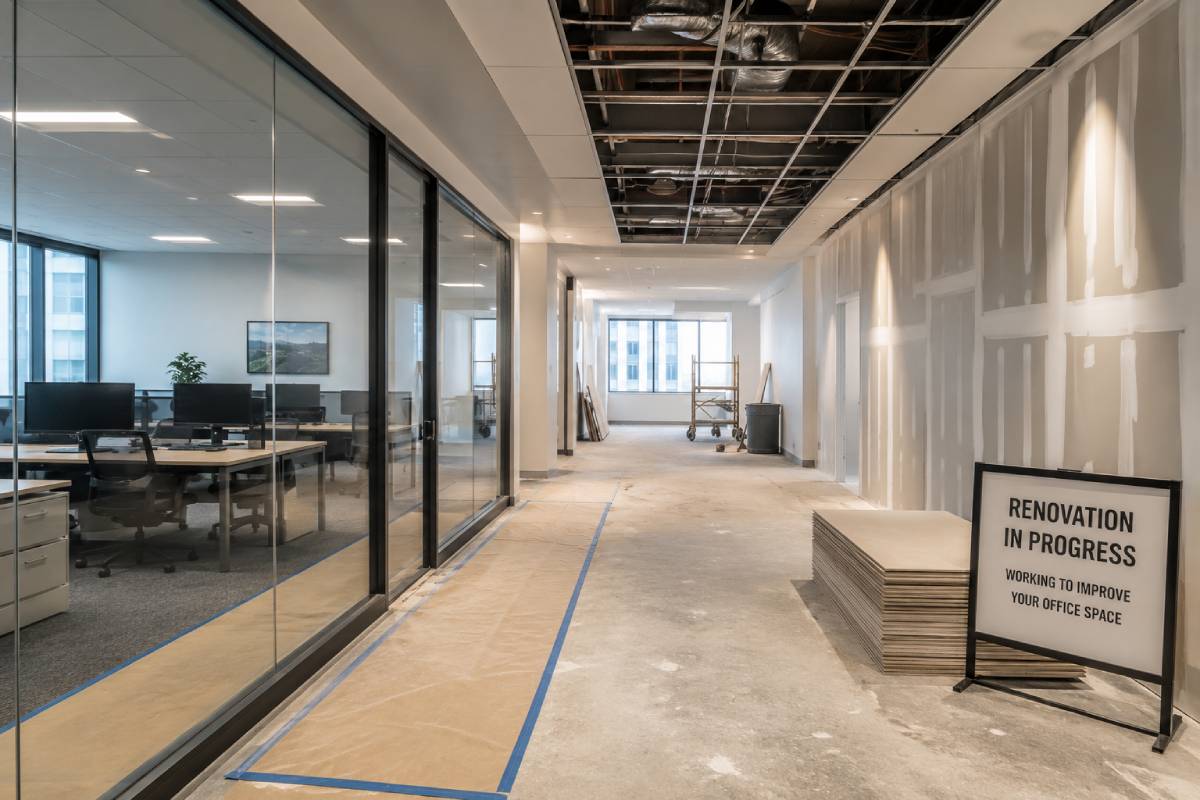
The biggest mistake businesses make is assuming that office renovation is primarily a construction project. It is not. A commercial office renovation is actually an operational management project. Construction is only one part of it.
The bigger challenge is maintaining business continuity while renovation activities happen around active employees, clients, vendors, and leadership teams.
This becomes especially important in commercial hubs such as:
- Thane West
- Wagle Estate
- Ghodbunder Road
- Majiwada
- Hiranandani Estate
Where businesses cannot afford extended downtime, unlike residential projects, offices generate revenue every day. Every hour of disruption has a measurable business impact. This is why professional planning becomes critical. The goal is not simply to complete renovation work. The goal is to complete renovation work while allowing the business to continue functioning efficiently. The companies that achieve successful office renovations are rarely the ones with the largest budgets. They are the ones with the strongest planning systems.
This guide explains exactly how experienced contractors and the best office interior designers in Thane plan commercial renovation projects without disrupting operations.
Stage 1: Understanding Why Office Renovations Fail Before Work Even Starts
When businesses think about office renovation, they usually focus on visible outcomes.
They think about:
- workstation layouts
- reception areas
- meeting rooms
- cabins
- branding walls
- lighting upgrades
These are important. But they are not the reason projects succeed or fail. Office renovation failures usually begin much earlier. They begin during planning.
The Biggest Mistake: Starting Design Before Understanding Operations
Many businesses hire designers and immediately start discussing:
- colors
- layouts
- furniture
- aesthetics
Without first understanding how the office actually functions. This creates a major problem because office design should support business operations. Not the other way around. A company handling client meetings all day requires a completely different renovation strategy than a software company with hybrid teams. Similarly, a sales office functions differently from a design studio or consulting firm. When renovation planning ignores operational reality, disruption becomes unavoidable.
Why Business Workflow Must Be Studied First
Before any renovation plan is created, experienced commercial contractors analyze:
Employee Movement
Understanding:
- entry patterns
- workstation usage
- meeting room demand
- collaboration zones
helps determine which areas can be renovated first.
Client Interaction Areas
If clients visit regularly, these areas require special planning. Reception disruption can affect brand perception. This means front-facing spaces often require different renovation schedules than back-office departments.
Critical Infrastructure Areas
Certain spaces support daily business continuity.
Examples include:
- server rooms
- IT support zones
- finance departments
- operations teams
Real Commercial Renovation Example
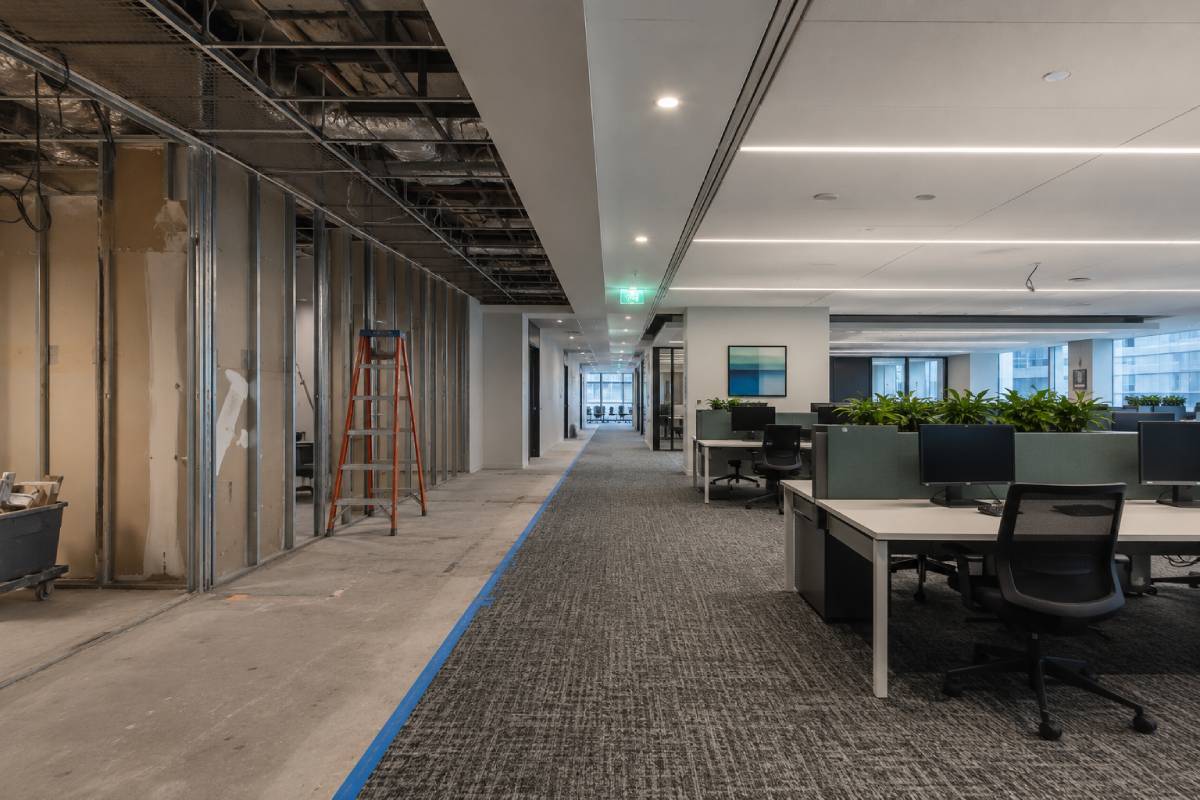
A consulting company in Wagle Estate planned a complete office redesign. Initially, they wanted all departments renovated simultaneously. During planning, it became clear that this would force nearly 60 employees into temporary work arrangements. Instead, the project was divided into phases. Only one section was renovated at a time. The business continued functioning normally throughout the project. The construction work was identical. The difference was planning.
Stage 2: Defining Renovation Goals Before Designing Anything
One of the most common reasons commercial office remodeling projects exceed budgets and timelines is unclear objectives. Businesses often start with a vague statement: "We want a better office." Unfortunately, that statement is not actionable. Professional planning requires precise goals.
What Problem Is the Renovation Solving?
Before discussing design, management should identify why the renovation is necessary.
Common reasons include:
Growth
The current office may no longer support team expansion.
- Additional workstations become necessary.
- Meeting rooms become overcrowded.
- Storage becomes insufficient.
Productivity Issues
Poor layouts often create operational inefficiencies.
- Excessive movement between departments.
- Collaboration becomes difficult.
- Noise affects concentration.
Brand Positioning
Older offices may no longer reflect the company's current market position.
This affects:
- client confidence
- recruitment
- employee pride
Infrastructure Modernization
Technology requirements evolve rapidly.
Older offices often lack:
- adequate networking
- power distribution
- conference systems
- collaboration technology
Why Clear Goals Improve Renovation Success
When objectives are defined clearly, every design decision becomes easier.
Without clear goals:
- layouts change repeatedly
- The scope expands constantly
- budgets increase
This is one of the biggest reasons office renovation projects become stressful.
Stage 3: Creating a Renovation Strategy That Protects Daily Operations
This is where professional commercial renovation differs significantly from residential renovation. Residential projects can often tolerate temporary inconvenience.
Businesses cannot.
- Revenue generation must continue.
- Employees must remain productive.
- Clients must remain comfortable.
This requires strategic planning.
Option 1: Phased Renovation
Phased execution is often the safest approach. Instead of renovating the entire office at once, work is divided into zones.
For example:
- Phase 1 – Reception and visitor areas
- Phase 2 – Workstations
- Phase 3 – Meeting rooms
- Phase 4 – Cabins and executive areas
This allows operations to continue throughout the project.
Advantages of Phased Renovation
Benefits include:
- reduced disruption
- improved employee comfort
- easier project control
- lower operational risk
Although the project may take slightly longer overall, business continuity remains intact.
Option 2: Weekend and After-Hours Execution
For certain businesses, renovation can be scheduled during:
- evenings
- weekends
- public holidays
This approach minimizes disruption during working hours. However, it requires highly organized contractor teams. Not all renovation activities are suitable for night execution.
Option 3: Temporary Department Relocation
Larger organizations sometimes create temporary work zones. Departments move temporarily while renovation occurs. Once completed, they return to the renovated space. This method works well for major office transformation projects.
Why Choosing the Wrong Renovation Strategy Creates Chaos
Many businesses underestimate the renovation impact. They assume employees can simply adjust.
Unfortunately, this often results in:
- lower productivity
- employee frustration
- project delays
- operational inefficiencies
The right renovation strategy protects both the project and the business.
Stage 4: Site Assessment Before Office Renovation Begins
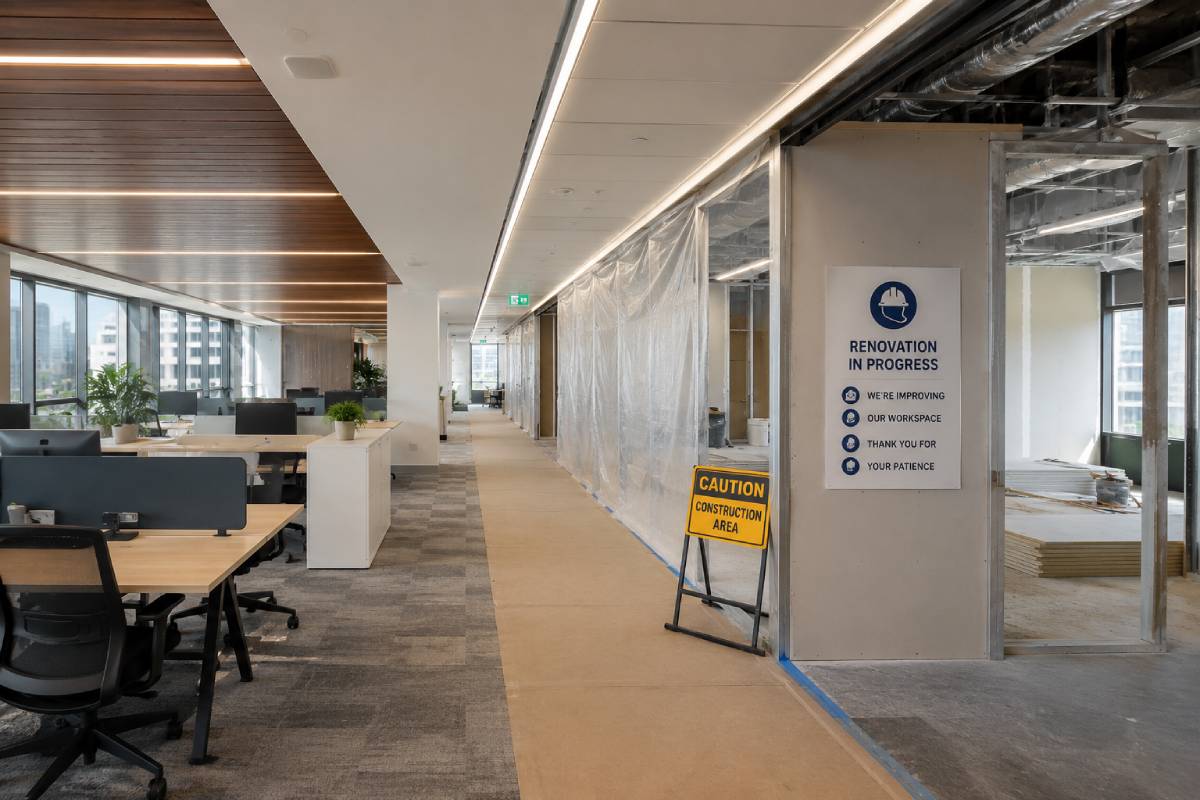
Before demolition, design, or construction begins, a professional site assessment must occur. This is one of the most important stages in successful office renovation in Thane projects. Most problems discovered during execution could have been identified during assessment.
What a Professional Site Assessment Includes
Civil Condition Evaluation
Checking:
- wall condition
- flooring levels
- structural limitations
- ceiling conditions
Electrical Infrastructure Review
Understanding:
- load capacity
- distribution systems
- cable routing
- backup power arrangements
HVAC Assessment
Air conditioning systems significantly influence office design. Ignoring HVAC planning often causes expensive modifications later.
Network & IT Assessment
Modern offices depend heavily on technology.
Planning must consider:
- server locations
- network racks
- Wi-Fi coverage
- conference systems
Why Assessment Reduces Project Risk
A detailed assessment identifies constraints before work begins. This allows accurate planning. Without assessment, surprises occur during execution. And surprises usually increase both cost and disruption.
Contractor Insight
The most successful commercial office renovations are rarely the fastest. They are usually the best planned. Businesses often focus on construction timelines. Experienced contractors focus on preparation timelines. Because strong preparation prevents operational disruption later.
Stage 5: Employee Communication: The Most Overlooked Part of Commercial Office Renovation
Many companies spend weeks discussing design layouts, materials, furniture, and contractor selection. But they spend almost no time preparing employees for the renovation process. This creates confusion before the first wall is touched. Employees arrive at work and find desks relocated, meeting rooms unavailable, construction noise in progress, and changes happening without explanation. Even when the renovation itself is well executed, poor communication creates resistance and frustration.
In reality, people are usually comfortable with change when they understand why it is happening and how it affects them. They become uncomfortable when changes appear unexpected and unmanaged.
Why Employees React Negatively to Poorly Planned Renovations
Most employees are not concerned about the renovation itself. They are concerned about how it affects their daily work.
Questions immediately arise:
- Will I need to move desks?
- Will meeting rooms be available?
- Will internet connections be affected?
- Will clients still visit the office?
- Will work-from-home arrangements be required?
When these questions remain unanswered, uncertainty increases. Productivity begins to drop before the renovation even starts. This is why experienced commercial interior contractors recommend preparing employees well in advance.
Creating a Renovation Communication Plan
A structured communication plan should be established before execution begins.
Employees should understand:
Project Objectives
Explain why the renovation is happening.
Examples include:
- team expansion
- productivity improvement
- infrastructure modernization
- client experience enhancement
When employees understand the purpose, support increases significantly.
Project Timeline
Provide realistic schedules.
Employees should know:
- start date
- phase sequence
- expected completion dates
This reduces confusion and speculation.
Workspace Changes
Explain:
- temporary desk relocations
- department movement
- meeting room availability
- access restrictions
Clear communication prevents daily operational disruptions.
Real Commercial Renovation Example
A professional services firm in Thane West renovated an active office with over 70 employees. Instead of announcing changes at the last moment, management shared a detailed renovation roadmap six weeks before execution. Weekly updates were followed throughout the project.
As a result:
- Employees remained cooperative
- Productivity remained stable
- Client interactions continued normally
The renovation succeeded largely because communication was treated as seriously as construction.
Stage 6: Commercial Office Remodeling Timeline Planning
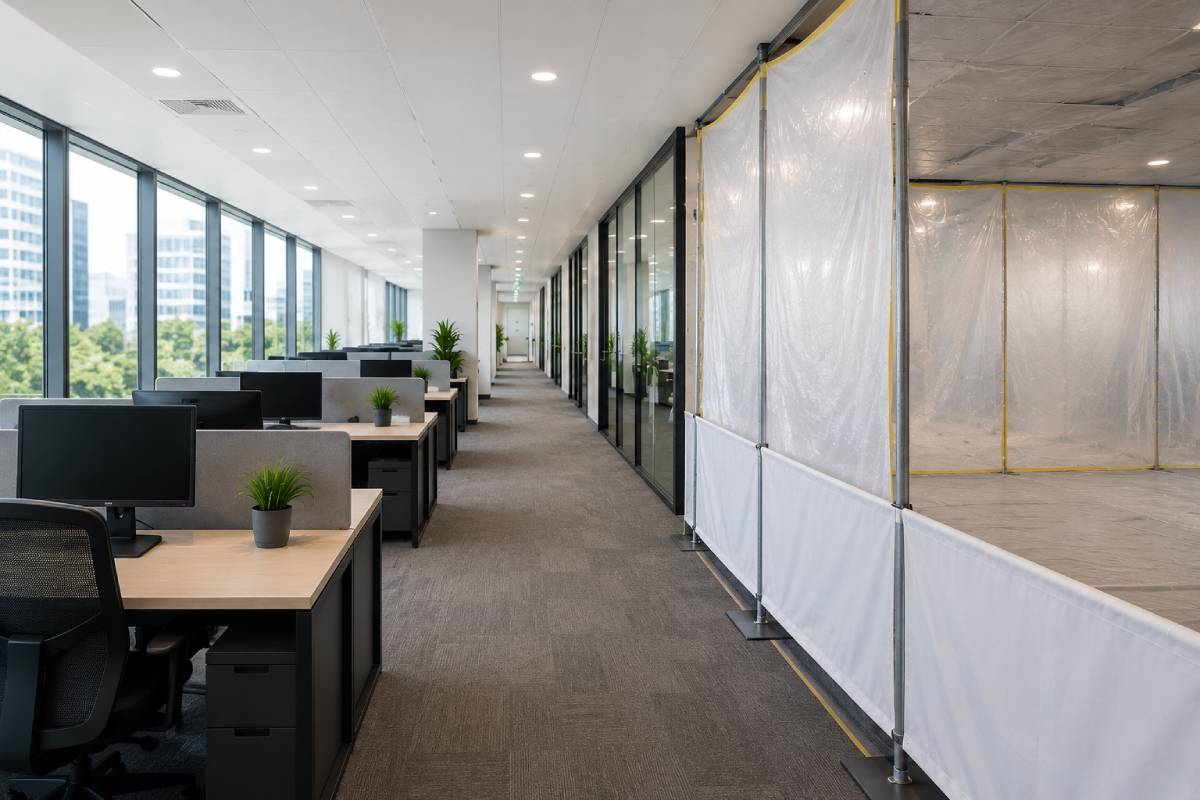
One of the biggest misconceptions in commercial office remodeling is that faster is always better. Business owners often push for aggressive timelines. They want projects completed immediately. While this sounds practical, a rushed renovation frequently creates larger problems. The objective should not be speed alone. The objective should be controlled execution.
Why Office Renovation Timelines Often Fail
Most timeline failures occur because businesses underestimate dependencies. Every stage affects the next stage.
For example:
- Electrical work influences ceiling work.
- Ceiling work influences lighting installation.
- Lighting installation influences painting.
- Painting influences furniture installation.
- Furniture installation influences technology setup.
When one stage slips, every stage behind it gets affected.
Building a Realistic Renovation Timeline
Professional renovation schedules usually include:
Planning Phase
Activities include:
- site surveys
- measurements
- design development
- approvals
This phase often determines project success.
Procurement Phase
Materials must be ordered before execution begins.
Common procurement items include:
- furniture
- partitions
- lighting systems
- ceiling materials
- flooring materials
Many delays originate from procurement issues.
Execution Phase
This includes actual construction activities. Tasks should follow a defined sequence.
Testing and Handover
The final stage includes:
- system testing
- snag correction
- quality inspection
- final handover
Many businesses forget to allocate sufficient time for this critical stage.
Why Phased Timelines Work Better
For active offices, phased execution usually produces better results.
Benefits include:
- fewer disruptions
- easier supervision
- reduced operational risk
- better quality control
Instead of managing one large renovation challenge, the project becomes a series of manageable stages.
Stage 7: Infrastructure Upgrades Without Business Downtime
Infrastructure work is one of the most challenging parts of a commercial office renovation. Unlike visual upgrades, infrastructure affects daily operations directly.
This includes:
- electrical systems
- networking
- internet connectivity
- access control
- surveillance systems
- air conditioning systems
Any disruption can affect business continuity immediately.
Why Infrastructure Planning Is Critical
Many offices continue operating while renovation occurs.
Employees still require:
- internet access
- power supply
- communication systems
Clients still expect professional service. Without careful planning, infrastructure upgrades can bring operations to a standstill.
Electrical System Upgrades
Modern offices often require significantly more power than older layouts.
Additional requirements may include:
- workstations
- conference rooms
- collaboration spaces
- charging stations
Professional planning evaluates future demand, not just current demand. This prevents expensive upgrades later.
Network Infrastructure Planning
Network systems are now as important as electrical systems.
Modern businesses depend on:
- cloud platforms
- video conferencing
- digital collaboration tools
- online client interactions
Network disruptions during renovation can be extremely costly.
This is why professional contractors often schedule networking upgrades during:
- weekends
- evenings
- low-activity periods
HVAC Coordination
Air conditioning systems influence nearly every office design decision.
Common mistakes include:
- Relocating workstations without HVAC evaluation
- Blocking airflow with partitions
- Increasing occupancy without adjusting cooling capacity
These issues affect employee comfort long after the renovation ends.
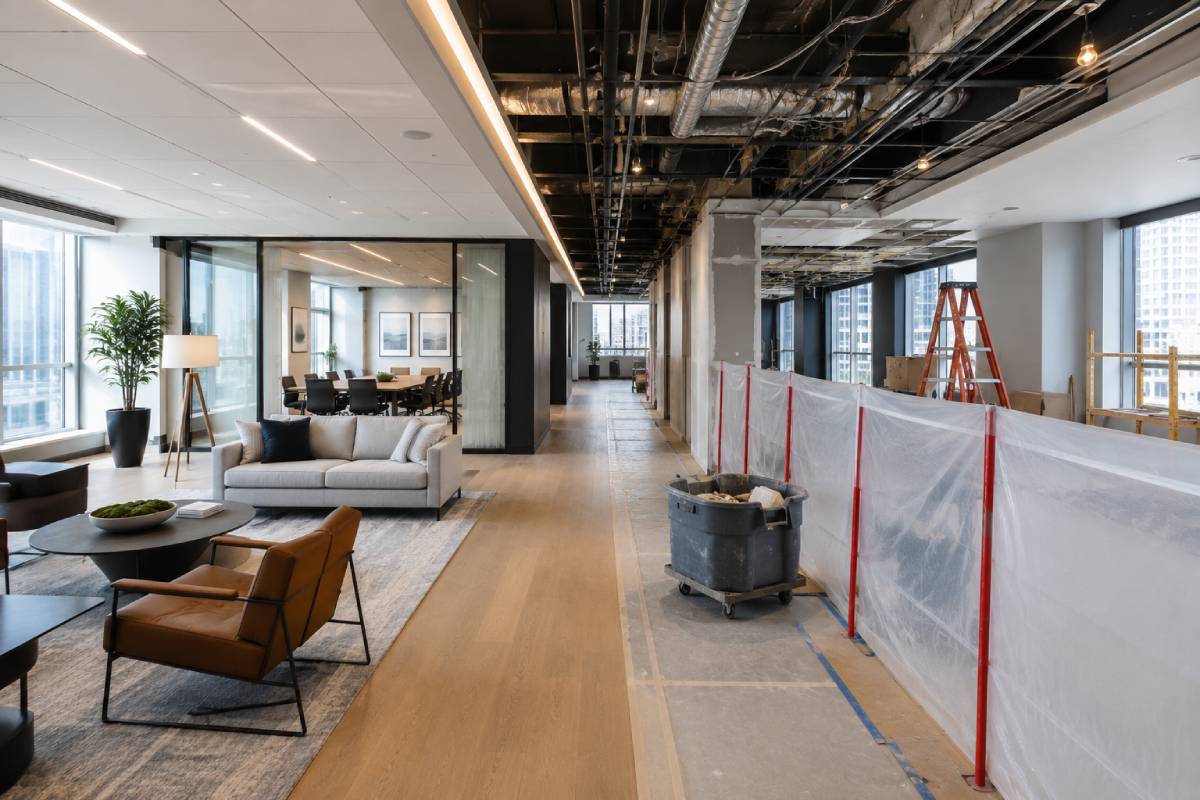
Stage 8: Working With the Best Office Interior Designers in Thane
Many businesses believe office design is primarily about aesthetics.
They focus on:
- colors
- finishes
- furniture
- visual appeal
While these factors matter, successful office design is much broader. The best office interior designers in Thane combine design expertise with operational understanding.
Design Must Support Business Function
Every business operates differently. A consulting company requires different spaces than a software company. A sales organization functions differently from an architecture firm.
Office design should support:
- communication
- productivity
- collaboration
- privacy requirements
Design without operational understanding often creates beautiful but inefficient spaces.
Questions to Ask Before Hiring Commercial Interior Designers
Before selecting a design partner, ask:
How Do You Understand Business Operations?
A professional designer should study:
- workflows
- departments
- communication patterns
Before proposing layouts.
How Do You Handle Active Office Renovations?
Experience with occupied office spaces is extremely valuable. Commercial renovation differs significantly from residential renovation.
How Do You Coordinate Execution?
Design quality alone is not enough. Execution capability matters equally.
Why Turnkey Execution Creates Better Results
Many businesses hire separate vendors for:
- design
- civil work
- furniture
- electrical work
This often creates coordination challenges.
Turnkey execution provides:
- single responsibility
- improved communication
- better accountability
- reduced delays
This is one reason many businesses prefer integrated commercial renovation partners.
Stage 9: Budget Planning for Commercial Office Renovation in Thane
Budget discussions usually focus on cost reduction. But experienced project managers focus on cost predictability. These are not the same thing. A project can be inexpensive initially but become expensive later because of changes and delays.
Why Commercial Renovation Budgets Increase
Budget increases usually occur because:
Scope Changes
Businesses frequently modify layouts after work begins.
Incomplete Planning
Missing information creates unexpected work.
Material Upgrades
Management often upgrades materials during execution.
Infrastructure Discoveries
Existing systems may require more work than expected.
Creating a More Accurate Budget
A strong budget should include:
Core Construction Costs
Includes:
- civil work
- partitions
- ceilings
- flooring
Infrastructure Costs
Includes:
- electrical work
- networking
- HVAC modifications
Furniture and Fixtures
Includes:
- workstations
- meeting rooms
- cabins
Contingency Allowance
Every commercial renovation should include contingency funds. This reduces financial stress when unexpected conditions appear.
Stage 10: Common Commercial Office Renovation Mistakes Businesses Make
After managing numerous office renovation projects, certain mistakes appear repeatedly. Avoiding these mistakes often saves more money than negotiating contractor discounts.
Mistake 1: Choosing Based Only on Price
The lowest quotation rarely represents the lowest project cost. Missing scope often appears later as additional charges.
Mistake 2: Ignoring Employee Experience
Employee productivity directly affects business performance. Poor planning creates frustration and operational inefficiencies.
Mistake 3: Starting Without Detailed Planning
Businesses sometimes rush into execution.
This usually leads to:
- revisions
- delays
- cost increases
Mistake 4: Underestimating Technology Requirements
Technology requirements continue to grow. Planning only for current needs often creates limitations quickly.
Mistake 5: Choosing Designers Without Execution Understanding
Good office renovation requires more than attractive layouts. It requires practical implementation expertise.
Stage 11: Final Commercial Office Renovation Framework
Before starting any commercial office renovation, every business should review the following framework.
- Step 1 – Understand business operations.
- Step 2 – Define renovation objectives.
- Step 3 – Conduct a detailed site assessment.
- Step 4 – Develop a phased execution strategy.
- Step 5 – Communicate with employees.
- Step 6 – Finalize design and infrastructure planning.
- Step 7 – Establish realistic budgets and timelines.
- Step 8 – Choose experienced commercial renovation professionals.
- Step 9 – Execute with continuous monitoring.
- Step 10 – Perform quality inspection before handover.
This framework significantly reduces operational disruption and project risk.
Internal Service Links
- Commercial Office Renovation in Thane
- Office Renovation Contractors in Thane
- Turnkey Construction Services in Thane
- Civil Work Services
Conclusion: Commercial Office Renovation Is About Business Continuity, Not Just Construction
A successful commercial office renovation is not measured solely by how the office looks after completion. It is measured by how effectively the business functions during the renovation process and how well the new environment supports future growth. Companies often focus heavily on finishes, furniture, and visual appeal. However, the most successful projects are driven by planning, communication, coordination, and operational understanding.
When renovation is approached strategically:
- Employees remain productive
- Clients remain comfortable
- Timelines stay predictable
- Budgets remain controlled
Whether you are planning a complete office renovation in Thane or a phased commercial office remodeling project, the goal should always be the same: Create a better workplace without sacrificing business performance during the journey.
FAQs
How long does a commercial office renovation take?
Most office renovation projects take between 4 and 12 weeks, depending on office size, scope of work, infrastructure requirements, and execution strategy.
Can office renovation be completed while employees continue working?
Yes. Through phased execution, weekend work, and temporary workspace planning, businesses can continue operations during renovation.
What is the first step in planning an office renovation?
The first step is understanding business operations, workflow requirements, and space utilization before discussing design solutions.
How can I reduce disruption during office renovation?
Use phased renovation, communicate with employees early, schedule critical work after hours, and work with experienced commercial renovation professionals.
How much does a commercial office renovation cost in Thane?
Costs vary based on office size, infrastructure upgrades, design complexity, materials, and project scope. A detailed site assessment is required for accurate budgeting.
Should I hire separate contractors or a turnkey company?
Turnkey companies usually provide better coordination, accountability, and project control because all work is managed under a single system.
Why do office renovation projects exceed budget?
The most common reasons are scope changes, inadequate planning, material upgrades, and unforeseen infrastructure requirements.
How do I choose the best office interior designers in Thane?
Look for professionals who understand business operations, commercial workflows, execution planning, and long-term workplace functionality — not just aesthetics.
What infrastructure upgrades should be considered during renovation?
Electrical systems, networking, HVAC, security systems, access control, conference technology, and future expansion requirements should all be evaluated.
Is a phased office renovation better than a full office shutdown?
In most cases, yes. Phased renovation allows business continuity, reduces operational risk, and minimizes employee disruption.
You May be Interested in
-
 June 20,2025
Top 10 Office Cabin Interior Design Ideas & Trends
Leadership cabins are more than secluded workstations—they speak to authority, vision, and control.....
Read More... -
 June 13,2025
Small Office Interior Design Guide for Compact Workspaces
Setting up a compact office doesn’t have to be stressful. With smart small office interior design.....
Read More... -
 June 09,2025
The Complete Guide to Small Office and Cafe Interior Design
Explore expert tips on cafe interior design and small office interiors to create spaces that convert and inspire.....
Read More...
FREE CONSULTATION
Talk To Our Expert

About Us
Founded in 2016. Eagle Ventures has estabilished itself as one of the greatest and prestigious providers of construction focused interior renovation services and building.