
Terrace Waterproofing Solutions for Residential Buildings
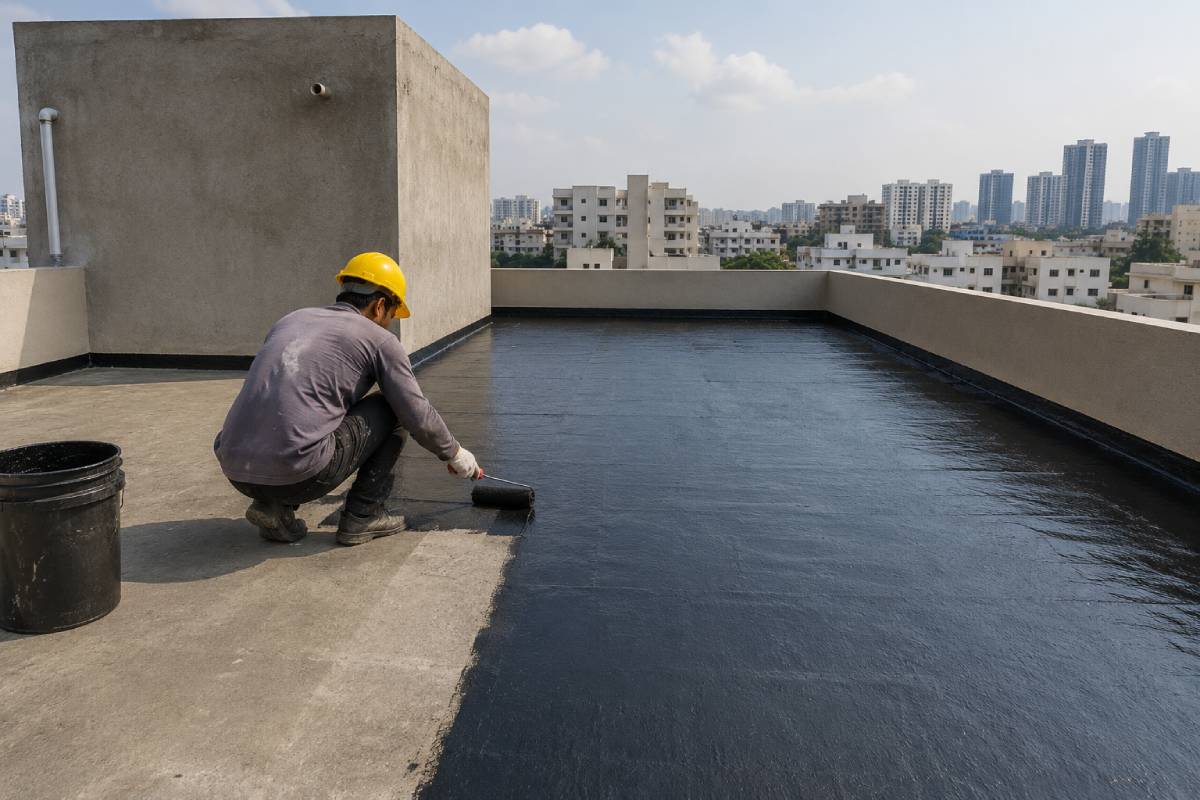
Introduction: Why Terrace Waterproofing Is One of the Most Important Investments for Any Residential Building
Most homeowners only start thinking about waterproofing after they see visible leakage. A damp patch appears on the ceiling. Paint begins peeling. Water stains start spreading across the wall.
Sometimes, small cracks become visible after the monsoon season. At this stage, many homeowners assume the problem is minor. They believe a coat of paint or local repair will solve the issue. Unfortunately, that is rarely true.
In reality, the visible damp patch inside the house is usually the final symptom of a much larger problem that started months or even years earlier on the terrace. The terrace is the first line of defense against rainwater.
Every year it faces:
- Heavy monsoon exposure
- Continuous UV radiation
- Temperature fluctuations
- Water stagnation
- Expansion and contraction of concrete
Over time, these conditions weaken the terrace surface. Small cracks develop. Water starts penetrating the slab. Moisture slowly moves through the structure. By the time water appears inside the house, the damage has often already reached multiple layers of the building.
This is why professional terrace waterproofing solutions are not simply maintenance activities. They are structural protection systems.
A properly waterproofed terrace can prevent:
- Ceiling leakage
- Wall dampness
- Mold growth
- Reinforcement corrosion
- Concrete deterioration
- Costly future repairs
For residential buildings in Thane, Mumbai, Ghodbunder Road, and surrounding areas where monsoon intensity is high, terrace waterproofing becomes even more critical.
The purpose of this guide is to explain how terrace waterproofing actually works, why failures occur, and what homeowners should know before hiring waterproofing contractors near me or investing in roof waterproofing services in Thane.
Understanding Why Terrace Waterproofing Fails in Residential Buildings
Before discussing solutions, it is important to understand the root causes of waterproofing failures. Many homeowners believe leakage occurs because waterproofing was never done.
In reality, leakage often occurs because waterproofing was done incorrectly, applied on an unstable surface, or allowed to deteriorate without maintenance.
Understanding these causes helps homeowners make better decisions during renovation and repair projects.
The Terrace Is Constantly Under Stress
Unlike interior surfaces, a terrace faces environmental stress every day. During summer, terrace surfaces can become extremely hot. During the monsoon, they remain wet for extended periods. This repeated heating and cooling cycle creates movement within the structure.
Concrete expands. Concrete contracts. Tiny cracks begin forming. Initially, these cracks may be microscopic. However, over time, they become pathways for water infiltration.
Once water enters the slab, damage begins from the inside. This is why waterproofing systems must be flexible enough to accommodate structural movement. Rigid waterproofing systems often fail because they cannot adapt to expansion and contraction.
Water Ponding Is One of the Biggest Causes of Waterproofing Failure
One of the most common problems we encounter during residential inspections is water ponding. After rainfall, water remains stagnant on the terrace. Instead of draining efficiently, it collects in low spots. This standing water places constant pressure on the waterproofing layer.
Over time:
- Waterproof membranes weaken
- Joints begin opening
- Cracks widen
- Water penetration increases
Many homeowners focus on waterproofing products while ignoring drainage design. However, even the best waterproofing system can fail if water remains trapped on the terrace for extended periods. Professional waterproofing always includes drainage evaluation.
Surface Cracks Allow Water to Penetrate Deep into the Structure
Cracks are often dismissed because they appear small. But water behaves differently than most homeowners expect. Water can enter through extremely narrow openings. Even hairline cracks become entry points during heavy rainfall.
Once water enters:
- Concrete remains damp
- Reinforcement begins corroding
- Structural deterioration accelerates
This is why crack treatment is a critical part of any professional waterproofing project. Applying waterproofing directly over untreated cracks usually results in premature failure.
Why Terrace Leakage Is More Dangerous Than Most Homeowners Realize
Many people think terrace leakage is mainly a cosmetic issue.
They see:
- Peeling paint
- Damp walls
- Ceiling stains
and assume the damage is limited to appearance. Unfortunately, the real damage often occurs inside the structure.
Moisture Gradually Weakens Concrete
Concrete is strong when it remains protected. However, continuous moisture exposure affects its durability. Water penetrates through pores and cracks. Over time, this weakens internal structural components. Repeated exposure accelerates deterioration. The problem becomes significantly worse when reinforcement steel is affected.
Reinforcement Corrosion Creates Long-Term Structural Risk
Inside reinforced concrete slabs, steel bars provide strength.
When water reaches these bars:
- Corrosion begins
- Steel expands
- Internal pressure increases
As corrosion progresses:
- Concrete starts cracking
- Pieces may detach
- Structural capacity decreases
This process often remains hidden until significant damage has already occurred. This is one reason why professional roof waterproofing services near me should never be delayed after leakage becomes visible.
Mold Growth Affects Indoor Living Conditions
Moisture creates ideal conditions for mold growth.
This often develops behind:
- Paint layers
- Furniture
- False ceilings
- Wardrobes
Apart from damaging interiors, mold affects indoor air quality. Many homeowners spend money replacing furniture and repainting walls without addressing the actual source of moisture. As a result, the problem keeps returning.
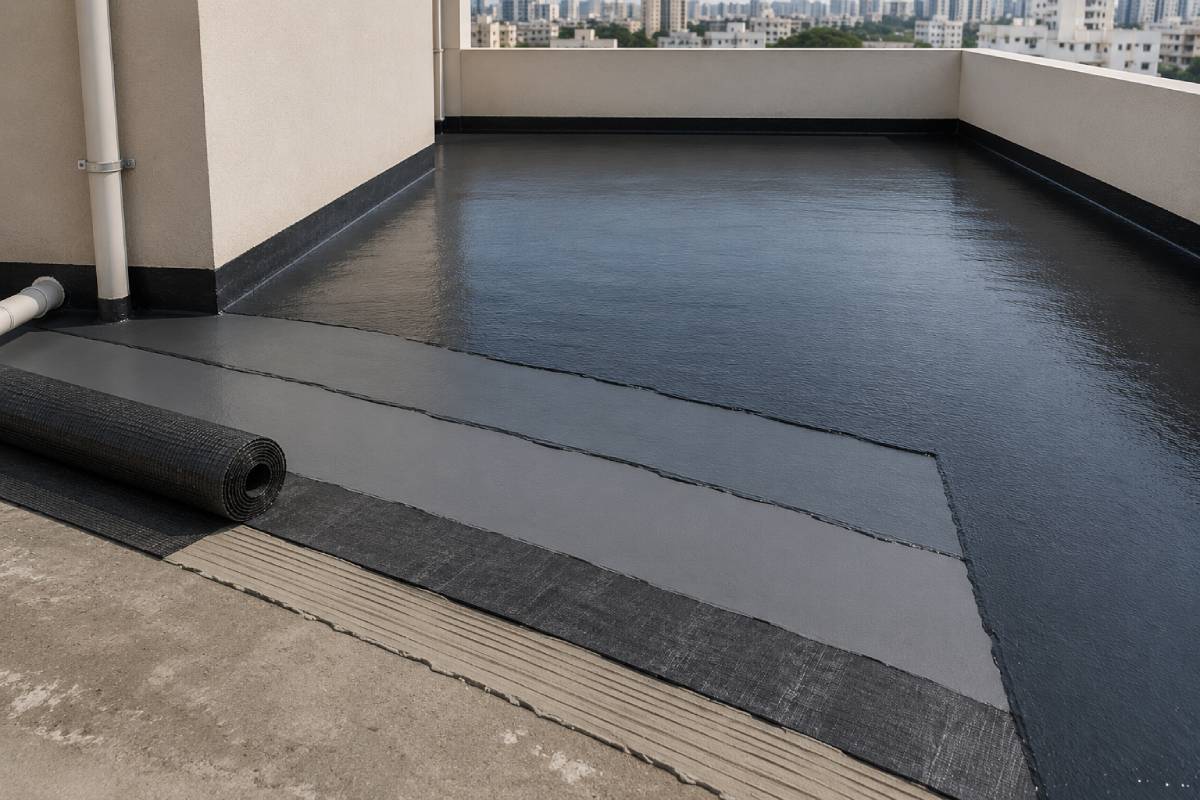
How Professional Terrace Waterproofing Solutions Actually Work
One of the biggest misconceptions about waterproofing is that it involves simply applying a coating on the terrace. Professional waterproofing is far more complex. A successful waterproofing system consists of multiple layers working together. Each layer performs a specific function. Skipping any stage increases the risk of future failure.
Step 1: Detailed Terrace Inspection
Before recommending any waterproofing method, professional contractors inspect the terrace thoroughly.
This inspection helps identify:
- Existing leakage points
- Surface cracks
- Water ponding areas
- Previous waterproofing failures
- Structural defects
Without inspection, selecting the correct solution becomes impossible. Different terraces require different waterproofing approaches.
Step 2: Surface Preparation
This stage determines the success of the entire waterproofing project. Many failures occur because waterproofing materials are applied to poorly prepared surfaces.
Preparation typically includes:
- Cleaning the terrace
- Removing loose particles
- Repairing cracks
- Correcting damaged concrete
- Eliminating contaminants
A waterproofing system can only perform as well as the surface beneath it.
Step 3: Crack Repair and Joint Treatment
Cracks and construction joints are usually the weakest areas of any terrace. These locations require special treatment before waterproofing begins.
Professional contractors:
- Open cracks properly
- Repair them using suitable materials
- Reinforce vulnerable joints
This creates a stable base for a waterproofing application. Without this step, water often finds its way beneath the waterproofing layer.
Step 4: Application of Waterproofing System
Once preparation is complete, the selected waterproofing system is installed.
The choice depends on:
- Terrace condition
- Exposure level
- Building age
- Existing surface material
Different methods provide different levels of protection. Choosing the correct system is critical for long-term performance.
Waterproofing on Terrace Tiles: The Most Common Residential Challenge
One of the most frequent questions homeowners ask is:
"Can waterproofing be done without removing terrace tiles?"
The answer is:
Sometimes yes. Sometimes no.
The correct solution depends entirely on where the failure is occurring. This is where professional diagnosis becomes critical. Many homeowners spend money on temporary coatings without identifying the actual source of leakage.
As a result:
- leakage returns
- costs increase
- frustration grows
Why Tiled Terraces Leak Even When Tiles Look Perfect
This confuses many homeowners. The terrace tiles appear completely fine.
There are:
- no visible cracks
- no broken tiles
- no missing grout
Yet water continues entering the structure. The reason is simple. Tiles are not waterproofing systems. Tiles are decorative and protective finishes. The actual waterproofing layer exists below the tiles. When this waterproofing layer fails, water starts traveling underneath the tile surface.
This water may remain hidden for months before signs appear inside the building. By then, moisture has already penetrated deeper into the slab.
Common Leakage Sources in Tiled Terraces
Failed Tile Grouting
Over time, grout joints deteriorate due to:
- UV exposure
- movement
- water penetration
Small gaps begin forming. Water enters through these openings and reaches the substrate below.
Hollow Tile Areas
Tiles sometimes become detached from the substrate. This creates hollow pockets. Water accumulates underneath. Over time, pressure builds and leakage increases.
Waterproofing Layer Failure
Even if tiles remain intact, the waterproof membrane beneath them may have deteriorated. This is especially common in older buildings. The visible tile surface may appear healthy while the protective layer below has already failed.
Expansion Joint Failure
Terraces naturally expand and contract. Expansion joints accommodate this movement.
When joints fail:
- cracks develop
- water enters
- leakage spreads rapidly
These areas require specialized treatment.
Best Terrace Waterproofing Solutions for Residential Buildings
Different terraces require different waterproofing systems. There is no single solution suitable for every situation. Professional waterproofing focuses on matching the correct technology to the actual site condition.
Liquid Applied Waterproofing Systems
This is one of the most commonly used solutions for residential terraces. A liquid membrane is applied directly onto the prepared surface. Once cured, it forms a seamless waterproof barrier.
Advantages
Liquid systems provide:
- seamless protection
- flexibility
- easy application
- crack bridging capability
They perform particularly well on terraces with multiple corners and penetrations.
Ideal Applications
Suitable for:
- residential terraces
- balconies
- utility areas
- medium-sized roof surfaces
Limitations
Performance depends heavily on:
- surface preparation
- application quality
- thickness control
Poor workmanship often leads to premature failure.
Cementitious Waterproofing Systems
Cement-based waterproofing is widely used in residential projects. It combines cement with waterproof additives. The system bonds directly with concrete surfaces.
Advantages
This system offers:
- strong adhesion
- durability
- compatibility with concrete structures
It works particularly well where moisture resistance is required.
Ideal Applications
Commonly used for:
- terraces
- water tanks
- balconies
- wet areas
Limitations
Traditional cementitious systems have limited flexibility. On terraces experiencing significant movement, cracks may eventually appear.
Polyurethane Waterproofing Systems
Polyurethane systems are considered premium waterproofing solutions. They provide excellent flexibility and weather resistance.
Why Polyurethane Performs Better
Unlike rigid systems, polyurethane accommodates movement. This is important because terraces constantly expand and contract. The membrane stretches rather than cracking. This significantly improves long-term durability.
Best Use Cases
Recommended for:
- high-exposure terraces
- premium residential projects
- large roof surfaces
- buildings facing severe weather conditions
Drawback
Higher material and application costs. However, the lifespan is often significantly longer.
APP and SBS Membrane Waterproofing
Membrane systems involve installing prefabricated waterproof sheets. These membranes create a physical barrier between water and the structure.
Why Membrane Systems Are Popular
Membranes provide:
- consistent thickness
- strong waterproofing performance
- long-term durability
They are widely used in commercial and residential buildings.
Best Applications
Ideal for:
- large terraces
- apartment buildings
- exposed roof systems
Important Consideration
Installation quality is critical. Poor joint welding can compromise the entire system. This is why experienced waterproofing contractors near me should always be preferred.
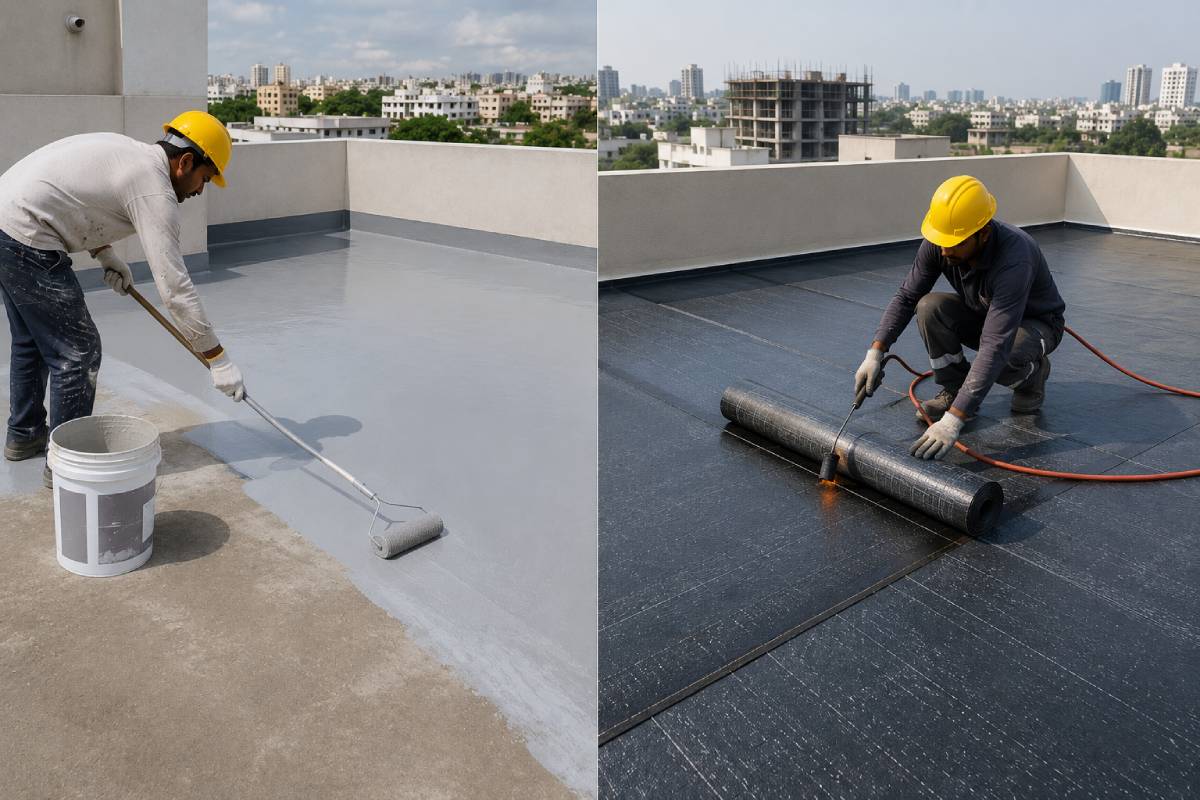
Liquid Waterproofing vs Membrane Waterproofing: Which Is Better?
This is one of the most common homeowner questions. The answer depends on the project. Neither system is universally superior. Each has advantages.
Liquid Waterproofing
Strengths
- Seamless application
- Better for complex shapes
- Easier repair
- Cost-effective for smaller areas
Weaknesses
- Highly dependent on workmanship
- Thickness inconsistencies can occur
Membrane Waterproofing
Strengths
- Uniform protection
- Excellent durability
- Better performance on large terraces
Weaknesses
- More complex installation
- Higher initial cost
Contractor Insight
For most residential apartment terraces in Thane, professional liquid membrane systems often provide excellent performance when installed correctly. For larger terrace areas and buildings with severe exposure, membrane systems are frequently preferred.
How to Choose Waterproofing Contractors Near Me
Choosing the right contractor often matters more than choosing the waterproofing product. Many waterproofing failures happen because of poor execution. Not poor materials.
Signs of a Professional Waterproofing Contractor
Look for contractors who perform detailed inspections before quoting.
A professional inspection should evaluate:
- leakage source
- crack conditions
- drainage problems
- terrace slope
- previous waterproofing history
Any contractor offering a solution without inspection should be viewed cautiously.
Ask About Surface Preparation
Surface preparation determines success.
Ask:
- How will cracks be repaired?
- How will loose concrete be treated?
- How will drainage issues be addressed?
Professional contractors answer these questions confidently.
Ask About Testing Procedures
Waterproofing should never be considered complete immediately after application. Flood testing is critical. This confirms performance before project closure.
Review Previous Projects
Experienced roof waterproofing services near me providers should have examples of:
- completed projects
- repair cases
- long-term performance results
Real project experience is one of the strongest indicators of capability.
Common Waterproofing Mistakes Homeowners Make
Many waterproofing failures could have been prevented through better decision-making.
Choosing the Cheapest Option
Waterproofing protects the entire building. Selecting purely on price often creates higher future costs.
Waterproofing Without Identifying the Source
Treating symptoms instead of causes is one of the biggest mistakes. Professional diagnosis always comes first.
Ignoring Drainage Problems
Waterproofing alone cannot compensate for poor drainage design. Both systems must work together.
Delaying Repairs
Small leaks become major structural issues over time. Early intervention reduces repair costs significantly.
Repainting Without Waterproofing
This is extremely common. Many homeowners repaint damp walls repeatedly. The actual terrace leakage remains unresolved. As a result, damage continues.
Terrace Waterproofing Maintenance After Installation
Waterproofing is not a "do it once and forget it" system. Regular inspection improves lifespan significantly.
Annual Terrace Inspection
At least once per year, inspect:
- cracks
- joints
- drainage outlets
- tile conditions
Small issues can be corrected before becoming expensive repairs.
Keep Drainage Outlets Clear
Blocked outlets cause:
- ponding
- pressure buildup
- membrane stress
Regular cleaning protects waterproofing performance.
Address Cracks Immediately
Even small cracks should be investigated. Early treatment prevents water penetration.
Monitor Monsoon Performance
After heavy rainfall:
- inspect ceilings
- Check damp areas
- monitor moisture signs
Early detection reduces future damage.
Internal Service Links
- Waterproofing Services
- Civil Work Services
- Masonry Services
- Home Renovation Services
- Interior Design Services
Conclusion: Choosing the Right Terrace Waterproofing Solution
The biggest misconception about waterproofing is that it is a repair. In reality, waterproofing is protection.By the time leakage becomes visible inside a home, moisture has often been affecting the structure for a considerable period. This is why professional terrace waterproofing solutions focus on prevention rather than reaction.
A successful waterproofing project requires:
- proper inspection
- crack treatment
- drainage correction
- suitable waterproofing technology
- skilled application
When these elements work together, the terrace remains protected for years. When any one of them is ignored, failures become far more likely.
For residential buildings in Thane, where monsoon exposure is significant, investing in professional waterproofing is one of the most valuable long-term maintenance decisions a homeowner can make.
FAQs
What is the best terrace waterproofing solution for residential buildings?
The best solution depends on the terrace condition, exposure level, and existing construction. Common options include liquid membranes, polyurethane systems, cementitious waterproofing, and APP membranes.
Can waterproofing be done without removing terrace tiles?
Yes, in some cases. If leakage is caused by grout failure or minor surface issues, specialized waterproofing treatments can sometimes be applied without tile removal. However, severe membrane failure may require tile removal.
How long does terrace waterproofing last?
A professionally installed system can last between 5 and 15 years, depending on the waterproofing method, exposure conditions, and maintenance practices.
Why does terrace leakage return after repair?
Leakage often returns because the source was not correctly identified. Surface repairs without addressing cracks, drainage issues, or membrane failure usually provide only temporary results.
What is waterproofing on terrace tiles?
It refers to waterproofing systems designed for tiled terraces where water is entering through grout joints, cracks, or failed waterproofing layers beneath the tile surface.
How much does terrace waterproofing cost?
Costs vary depending on terrace size, condition, repair requirements, waterproofing technology, and accessibility. Proper inspection is required for accurate estimates.
How do I find reliable waterproofing contractors near me?
Look for contractors who provide site inspections, explain repair methodology, offer testing procedures, and can demonstrate previous project experience.
Is roof waterproofing necessary for new buildings?
Yes. Even new buildings benefit from preventive waterproofing because exposure to weather, UV radiation, and structural movement begins immediately after construction.
What are the signs that my terrace needs waterproofing?
Common signs include:
- ceiling dampness
- paint peeling
- mold growth
- water stains
- terrace cracks
- standing water after rainfall
How often should terrace waterproofing be inspected?
Professional inspection is recommended annually and after major monsoon seasons to identify small issues before they become major repairs.
You May be Interested in
-
 June 20,2025
Top 10 Office Cabin Interior Design Ideas & Trends
Leadership cabins are more than secluded workstations—they speak to authority, vision, and control.....
Read More... -
 June 13,2025
Small Office Interior Design Guide for Compact Workspaces
Setting up a compact office doesn’t have to be stressful. With smart small office interior design.....
Read More... -
 June 09,2025
The Complete Guide to Small Office and Cafe Interior Design
Explore expert tips on cafe interior design and small office interiors to create spaces that convert and inspire.....
Read More...
FREE CONSULTATION
Talk To Our Expert

About Us
Founded in 2016. Eagle Ventures has estabilished itself as one of the greatest and prestigious providers of construction focused interior renovation services and building.